Before the Family Decides to Sell the Ranch, Answer These 7 Questions
How Texas families can navigate the financial, emotional, and generational decisions surrounding a significant land asset.
There is something different about selling a ranch that has been in the family for generations.
A house may be where you grew up. A business may represent decades of hard work. But a family ranch often carries pieces of both, along with something harder to define.
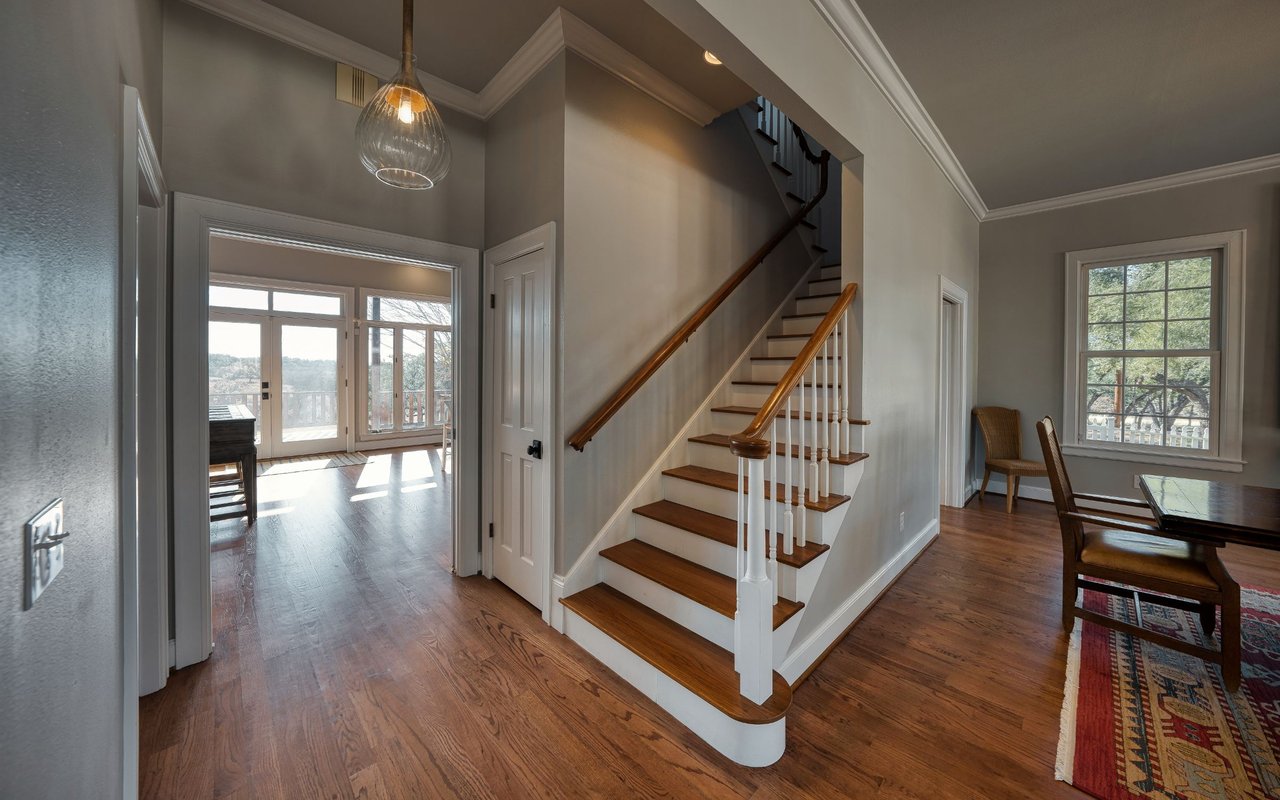
It may be where your grandfather taught you to hunt. Where your children caught their first fish. Where cousins gathered every Thanksgiving, and where generations of family stories became attached to particular pastures, old oak trees, creek crossings, and the porch of a ranch house.
For some families, the ranch is the one place everyone still comes home to.
Then, somewhere along the way, the question arises:
Should we sell the family ranch?
Sometimes the question comes after the passing of a parent or grandparent. Sometimes it follows years of increasing maintenance expenses, changing family circumstances, or the realization that the next generation doesn't share the same interest in ranch ownership.
And sometimes, the ranch has simply become too valuable a financial asset for the family to ignore.
Whatever brings the question forward, I believe families are better served by asking several important questions before making a decision.
Because the question isn't always whether the ranch can be sold.
It's whether selling, keeping, dividing, or restructuring ownership is the right decision for the family and the land.
1. What Does the Ranch Mean to Each Member of the Family?
This may be the most important question, and it is rarely as straightforward as people expect.
Within the same family, a ranch can represent very different things.
For one sibling, it may be home.
For another, it may be a cherished place to visit a few weekends each year.
For a third, it may be a substantial financial asset that could provide retirement security, fund a business, or help educate children.
None of these perspectives is inherently wrong.
The problem arises when everyone assumes the other family members feel the same way.
I have found that families benefit from separating the emotional significance of a ranch from the practical realities of ownership.
That doesn't mean dismissing sentiment.
Quite the opposite.
If the family doesn't acknowledge what the ranch means to each person, those feelings will eventually find their way into the financial discussions.
Before discussing price, listing agreements, or potential buyers, I would encourage families to have an honest conversation about what the property represents to each owner.
The answers may be surprising.
One family member may be deeply attached to the ranch but have no desire to manage it.
Another may be willing to take responsibility for the property but unable to purchase the interests of the other heirs.
And someone who initially seems eager to sell may simply be frustrated with the current ownership arrangement.
Understanding those differences can open the door to solutions that weren't initially obvious.
2. Does the Next Generation Actually Want the Responsibility of Ownership?
There is a difference between loving the family ranch and wanting to own and operate it.
A ranch requires attention.
Fences need repair. Roads wash out. Wells and pumps fail. Brush grows. Buildings deteriorate. Property taxes, insurance, and other expenses continue whether anyone visits the property or not.
For a working ranch, livestock and agricultural operations introduce additional responsibilities.
For a recreational ranch, wildlife management, habitat maintenance, security, and improvements require ongoing investment.
It is easy for the generation currently managing the property to assume that the next generation will naturally take over.
But circumstances change.
Children move away. Careers develop elsewhere. Families grow. Interests evolve.
A son or daughter may treasure the memories of growing up on the ranch without having the time, resources, or desire to manage it.
That doesn't mean they don't appreciate what previous generations built.
It simply means their lives have taken a different direction.
Before committing to another generation of ownership, families should ask:
- Who genuinely wants to own the ranch?
- Who is willing to manage it?
- Who has the financial capacity to support it?
- How will decisions be made?
- What happens when the next generation inherits its interests?
A family that cannot answer these questions may be postponing a difficult decision rather than solving it.
Passing down a ranch without passing down a workable ownership structure can turn a treasured legacy into an unexpected burden.
3. What Does It Really Cost to Keep the Ranch?
One of the most common mistakes in evaluating a family ranch is focusing entirely on its market value while overlooking its annual carrying costs.
A ranch may be worth several million dollars and still produce little or no income.
In fact, many recreational and legacy ranches are intentionally owned for reasons other than financial return.
There is nothing wrong with that.
But the economics should be understood.
Consider a hypothetical 500-acre Hill Country ranch.
Its annual expenses might include property taxes, insurance, road and fence maintenance, water infrastructure, brush management, utilities, equipment, and repairs to residences or other improvements.
Even if the ranch qualifies for agricultural or wildlife special-use valuation, the overall cost of ownership can be substantial.
Some properties generate income through grazing leases, hunting leases, agricultural production, or other activities.
Others are entirely supported by the family.
The important question isn't necessarily whether the ranch is profitable.
It is whether the family understands and accepts the cost of keeping it.
I would encourage owners to develop a realistic annual operating budget, including a reserve for major repairs and future capital expenditures.
Then consider the longer-term picture.
What will the ranch cost over the next ten years?
Are there aging improvements that will require replacement?
Will significant brush management or infrastructure investment be necessary?
Who will contribute those funds?
And what happens if one family member can no longer afford their share?
A ranch doesn't have to generate a financial return to justify ownership. But the decision to carry it should be intentional.
4. What Is the Ranch Actually Worth—and What Could That Value Mean to the Family?
This is where the financial conversation becomes more serious.
A ranch that was purchased decades ago for a relatively modest amount may now represent one of the family's largest assets.
That can create a significant concentration of family wealth in a single, relatively illiquid property.
Consider a hypothetical family ranch valued at $6 million.
If three siblings inherit equal interests, each may have an economic interest worth approximately $2 million before accounting for ownership structure, taxes, transaction costs, and other considerations.
That is a meaningful amount of wealth.
For one sibling, keeping the ranch may be an easy decision because they have other financial resources.
For another, the value tied up in the property may represent the majority of their net worth.
Those two people may understandably reach different conclusions about what should happen next.
This is why I believe a credible ranch valuation should be part of the family discussion.
Not an inflated number intended to make everyone feel good.
Not simply the highest asking price of a nearby property.
A defensible evaluation based on comparable transactions, water, location, improvements, acreage, access, market conditions, and buyer demand.
Families should understand both the ranch's likely market value and the uncertainty surrounding that estimate.
Only then can they meaningfully evaluate alternatives.
Perhaps one heir can purchase the interests of the others.
Perhaps selling a portion of the property could provide sufficient liquidity.
Perhaps the family could establish a more formal ownership and management structure.
Or perhaps selling the entire ranch is the most appropriate decision.
Knowing what the ranch is worth doesn't tell the family what to do. It gives them the information necessary to make that decision.
5. Can the Ranch Be Divided Without Destroying What Makes It Valuable?
When multiple heirs are involved, dividing the ranch often seems like a natural compromise.
If three siblings inherit 600 acres, why not divide it into three 200-acre properties?
Sometimes that works.
Sometimes it creates more problems than it solves.
Ranches are not uniform pieces of real estate.
One portion may contain the primary residence.
Another may have the best water.
One tract may have significant road frontage, while another could require an access easement.
Some acreage may have exceptional views or development potential.
Other portions may be steep, heavily wooded, or less accessible.
A division based solely on acreage may produce parcels with substantially different values.
There is also the question of what happens to the ranch as a whole.
A 600-acre property with privacy, contiguous habitat, and large neighboring ownerships may appeal to a particular buyer.
Dividing it into smaller tracts could create new opportunities and potentially increase aggregate market value.
But it could also compromise privacy, wildlife habitat, access, agricultural operations, or the character that made the original ranch desirable.
In some cases, subdivision requires new surveys, easements, utilities, infrastructure, and compliance with applicable county or other development requirements.
Before drawing lines on a map, the family should understand the consequences.
I would want to evaluate the ranch in at least two ways:
What is the property worth as one contiguous ranch?
What could the individual tracts be worth if divided, after accounting for costs and practical limitations?
The answers may be quite different.
And the most financially attractive option may not be the one that best serves the family's long-term objectives.
6. Are We Making a Decision for the Right Reasons—or Simply Reacting to Circumstances?
Significant family land decisions often arise during periods of change.
The passing of a parent.
A divorce.
An unexpected financial need.
A disagreement among heirs.
A major repair expense.
Or perhaps an unsolicited offer from a neighbor or developer.
These events can create pressure to act quickly.
Sometimes a prompt decision is necessary, particularly when an estate has obligations, ownership disputes exist, or financial circumstances demand liquidity.
But when time allows, I believe families benefit from distinguishing between a temporary problem and a permanent decision.
For example, suppose one sibling is frustrated because they have been managing the ranch without meaningful help from the others.
Is the problem the ranch itself?
Or is it the management arrangement?
Could a professional ranch manager help?
Could the family establish a budget and formalize responsibilities?
Would a lease generate enough income to reduce the financial burden?
Alternatively, perhaps the family has spent years attempting to make shared ownership work, and the arrangement simply no longer serves anyone well.
That is important information too.
The objective should not be to preserve ownership at all costs.
It should be to identify the underlying problem and evaluate whether selling is the best solution.
A permanent decision deserves more than a temporary reaction.
7. What Would We Want the Ranch's Next Chapter to Look Like?
This is the question I find most interesting.
Families often frame the decision as a choice between keeping the ranch and losing it.
But I think there is another way to look at the situation.
What does good stewardship look like from this point forward?
For some families, the answer is preserving the property intact for future generations.
For others, it may mean transitioning management to a younger family member.
Sometimes the appropriate choice is to sell a portion of the ranch to create the financial stability necessary to keep the remainder.
A conservation easement may be worth exploring when long-term land protection is a priority, although the legal, financial, and valuation implications require careful professional analysis.
And sometimes the best decision is to sell the ranch to someone who has the resources, interest, and commitment to care for it.
I don't believe selling a family ranch automatically represents a failure of stewardship.
Land changes hands.
Families change.
Economic circumstances change.
What matters is whether the decision was thoughtful and whether the family understood the consequences.
A ranch that has been well cared for over generations can continue to be well cared for under new ownership.
The family's relationship with the property may end, but the land's story continues.
The Question Behind All Seven Questions: Does Everyone Need the Same Outcome?
One of the most challenging aspects of family land ownership is the assumption that everyone must want the same thing.
They don't.
One heir may want to preserve the ranch.
Another may want liquidity.
A third may be comfortable with either outcome but unwilling to take responsibility for management.
The solution may not require everyone to reach the same emotional conclusion.
It requires a structure that respects their ownership rights and practical objectives.
That might involve a negotiated buyout, a partial sale, a carefully designed ownership agreement, or a sale of the entire property.
The legal and tax implications of these arrangements should be evaluated with qualified professionals.
But the starting point is often a conversation rather than a transaction.
When families begin by understanding each other's objectives, they have a much better opportunity to reach a workable outcome.
When Should a Family Bring in Outside Advisors?
In my opinion, earlier than most families expect.
Not because every inherited ranch needs to be sold, but because significant land assets can involve questions that fall outside any one person's expertise.
An estate attorney may help clarify ownership, authority, and legal obligations.
A CPA or tax advisor can evaluate income tax, estate tax, basis, and other financial considerations.
A qualified rural appraiser may be needed for estate, tax, litigation, or other formal valuation purposes.
A ranch broker with relevant market experience can help the family understand current market conditions, buyer demand, property characteristics, and the potential consequences of selling the ranch intact versus dividing it.
The objective should be to assemble the information necessary for a good decision—not to create unnecessary complexity.
For trustees, executors, and other fiduciaries, the process also needs to account for their specific legal duties and the interests of the beneficiaries.
A defensible decision is one that can be explained, supported, and documented.
That becomes particularly important when family members disagree.
A Practical Path Forward for Families Considering a Ranch Sale
Before making a final decision, I would encourage families to work through a deliberate process.
First, understand the ownership. Determine who has legal authority, what interests exist, and whether trusts, estates, or other entities are involved.
Second, understand the property. Assemble the surveys, deeds, tax records, leases, water information, easements, and improvement records.
Third, understand the financial picture. Evaluate current market value, annual carrying costs, deferred maintenance, and potential income.
Fourth, understand the family's objectives. Give each owner an opportunity to explain what matters to them and what outcome they hope to achieve.
Fifth, evaluate the alternatives. Keeping, leasing, restructuring ownership, buying out interests, dividing, partially selling, and selling the entire ranch should all be considered where appropriate.
Finally, develop a plan. Once the family understands its options, establish responsibilities, timelines, and the professional guidance necessary to carry out the decision.
This process may ultimately lead to a sale.
Or it may give the family enough clarity and confidence to keep the ranch.
Either can be a successful outcome.
Sometimes the Best Ranch Decision Is Not to Sell
As a Texas ranch broker, I spend a great deal of time helping people buy and sell land.
But I don't believe every family that asks about selling should automatically be encouraged to put its property on the market.
Sometimes the family simply needs to understand what the ranch is worth.
Sometimes they need to know whether dividing it is feasible.
Sometimes they need help understanding what the next generation would be taking on.
And sometimes they need someone to explain the market without creating pressure to make a transaction.
I believe that is an important distinction.
A good ranch advisor should help a family make the right decision about its land—even when that decision is to keep it.
When the family does decide to sell, the same groundwork becomes invaluable.
Understanding the property, resolving uncertainties, identifying the likely buyer pool, and developing a defensible pricing and marketing strategy can materially improve the process.
But those steps should follow the family's decision, not dictate it.
Final Thoughts: Stewardship Is About More Than Keeping the Land
There is a tendency to measure the success of a family ranch by how many generations have owned it.
I understand that sentiment.
There is something remarkable about a piece of Texas land remaining in the same family for a century or more.
But longevity alone doesn't tell the entire story.
A ranch that becomes a source of financial hardship, resentment, or conflict among family members may no longer be serving the purpose previous generations intended.
On the other hand, a family that has the means, interest, and commitment to preserve a ranch for another generation may be holding something truly irreplaceable.
The answer is different for every family.
Before deciding whether to sell, I believe the most important thing is to understand the land, understand the financial realities, and understand one another.
Because the ultimate responsibility isn't simply to preserve ownership.
It's to make a thoughtful decision about the land's next chapter—and the family's.
Stewardship of Land, Family, and Process.
About the Author
Chris Stearns | Stearns Ranch Realty Group
Chris Stearns is a Texas ranch broker and ranch asset advisor serving landowners, families, fiduciaries, and sophisticated buyers throughout the Texas Hill Country, Central Texas, and South Texas.
Through Stearns Ranch Realty Group, he helps families navigate significant ranch and rural estate transitions, with an emphasis on defensible valuation, disciplined planning, and thoughtful stewardship.
Stearns Ranch Realty Group
Fredericksburg, Texas
stearnsranchrealty.com
Disclaimer: This article is intended for general informational purposes and does not constitute legal, tax, investment, or financial advice. Families considering significant land transactions should consult qualified legal, tax, and financial professionals regarding their individual circumstances.