When Jaguars Roamed the Texas Hill Country
In the spring of 1909, two boys went hunting with their dogs in the rocky country between London and Junction, Texas.
They weren't looking for anything extraordinary.
Sheep had reportedly been disappearing in the area, and the boys thought their dogs might turn up a bobcat or fox.
Instead, the dogs found something much larger.
They followed the animal through the hills until they cornered it in a shallow cave.
The boys, Everett Stewart and Charley Spoonts, caught up with the dogs and found themselves staring at an animal they apparently didn't recognize.
It was a massive spotted cat.
And they didn't have a gun.
The boys ran for help and eventually found a local man, Will McCollum, working in a field. McCollum grabbed a rifle and followed them back into the hills.
There, he killed the cat.
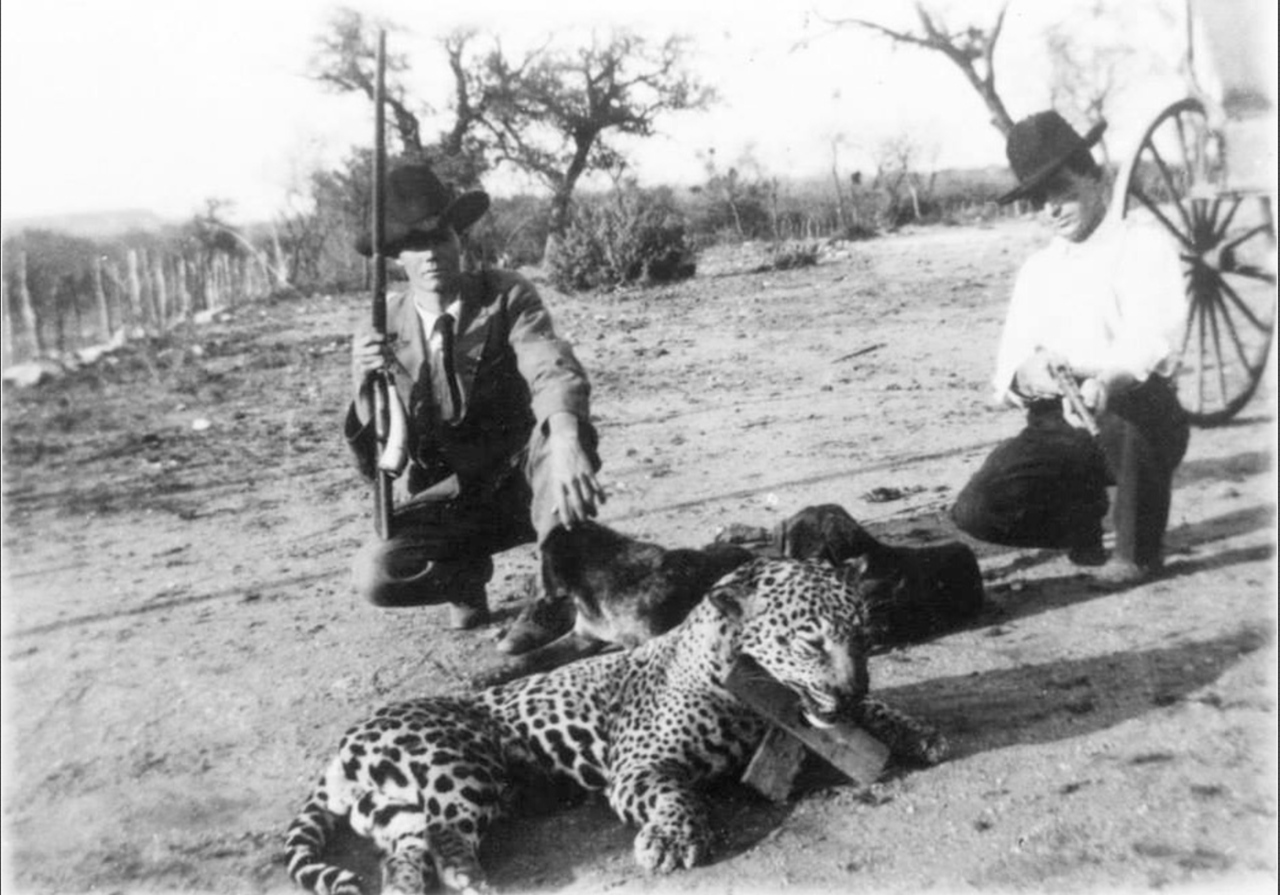
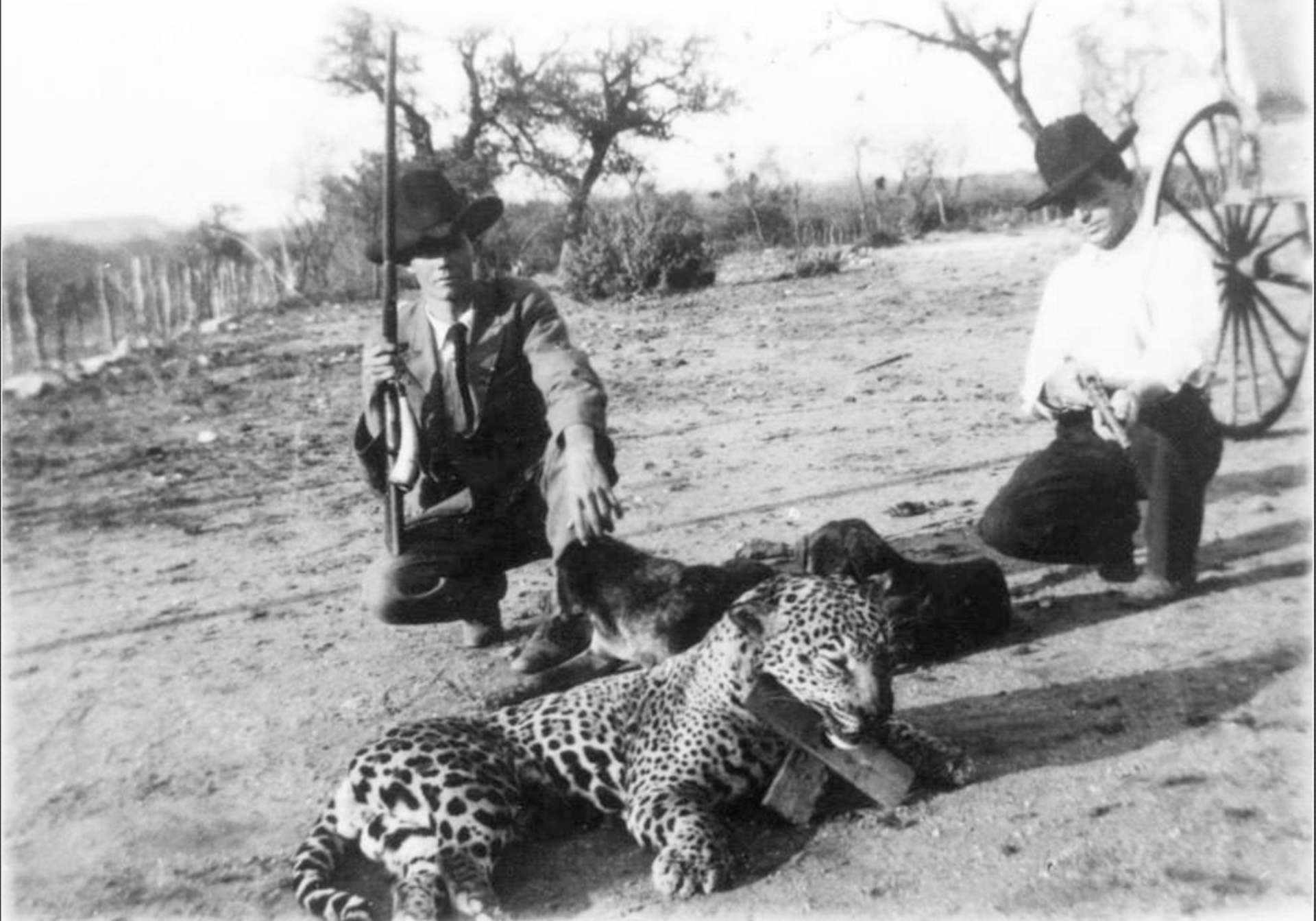
They brought the animal into London, where it was reportedly weighed at George May's store.
According to the family account preserved years later, the cat weighed approximately 126 pounds and measured 6 feet, 7 inches from nose to tail.
It was a jaguar.
This wasn't Mexico.
It wasn't Arizona.
And it wasn't some distant corner of Texas.
London sits in Kimble County, between Junction and Mason—Hill Country that many of us drive through regularly.
From Fredericksburg, it's roughly the same country we consider our backyard.
And perhaps most surprising of all, this happened in 1909.
The jaguar in that photograph wasn't the only one.
Once you begin digging through old natural-history records, government biological surveys, newspaper accounts, photographs and the recollections of early Texans, a very different picture of Texas begins to emerge.
There were jaguars near Mason.
Goldthwaite.
Ozona.
San Antonio.
The Nueces.
The Brazos.
The San Jacinto.
And according to Sam Houston himself, along the headwaters of the Guadalupe.
The jaguar wasn't simply an occasional tropical animal that wandered across the Rio Grande.
The jaguar was once a Texas animal.
Sam Houston Remembered Them on the Guadalupe
One of the most fascinating accounts comes from Sam Houston.
Naturalist John James Audubon recorded information from Houston concerning the jaguar's presence in Texas.
Houston described encountering jaguars around the headwaters of eastern tributaries of the Rio Grande and the Guadalupe.
For those of us who know the Hill Country, stop and picture that landscape.
The upper Guadalupe.
The same river country around Hunt, Kerrville, Center Point and Comfort that we know today.
Now imagine it before highways, subdivisions and modern fences divided the landscape.
Somewhere in that country, jaguars once moved through the river bottoms and surrounding hills.
Houston also related an incident near the headwaters of the San Marcos.
During the night, his party's horses suddenly became agitated—snorting and behaving as though a predator was nearby.
The men investigated but could see little in the darkness.
By morning, one of their horses had been killed and largely consumed.
Houston attributed the attack to jaguars.
Whether we can know with certainty what killed that particular horse nearly two centuries later is another matter.
But Houston's broader testimony is important because it wasn't an isolated claim.
Other records increasingly fill in the map.
A Jaguar Near Mason
More than fifty years before the London animal was killed, another jaguar was reported near Fort Mason.
The year was 1856.
Fredericksburg itself was only about a decade old.
Mason was a frontier military post.
The surrounding Hill Country looked dramatically different from what we see today.
Black bears still occupied the region.
Wolves were present.
Mountain lions were common.
And somewhere in the brush near Fort Mason, a jaguar was reportedly flushed from cover.
Today you can drive from Fredericksburg to Mason in less than an hour.
It is difficult to reconcile that familiar landscape with an animal we now associate with tropical forests thousands of miles away.
But Mason wasn't an isolated occurrence either.
In 1903, an adult male jaguar was killed near Center City in Mills County.
That record is particularly valuable because the animal was physically examined, and its skull eventually became part of the Smithsonian collection.
Six years later came the London jaguar.
Then another was documented near Ozona in 1915.
The records were becoming fewer.
The range was contracting.
But jaguars had not quite disappeared from Texas.
The Last Jaguar in Texas
By the middle of the twentieth century, the story had moved south.
In April 1948, a man named Richard Cuevas went rabbit hunting outside Kingsville.
He carried a .410 shotgun.
Near Santa Gertrudis Creek, Cuevas noticed a large animal crouched behind a cactus.
It eventually climbed a tree.
Cuevas retrieved a rifle and killed it.
The animal was examined by Valgene Lehmann, the respected King Ranch wildlife biologist.
It was a male jaguar.
It weighed 121 pounds.
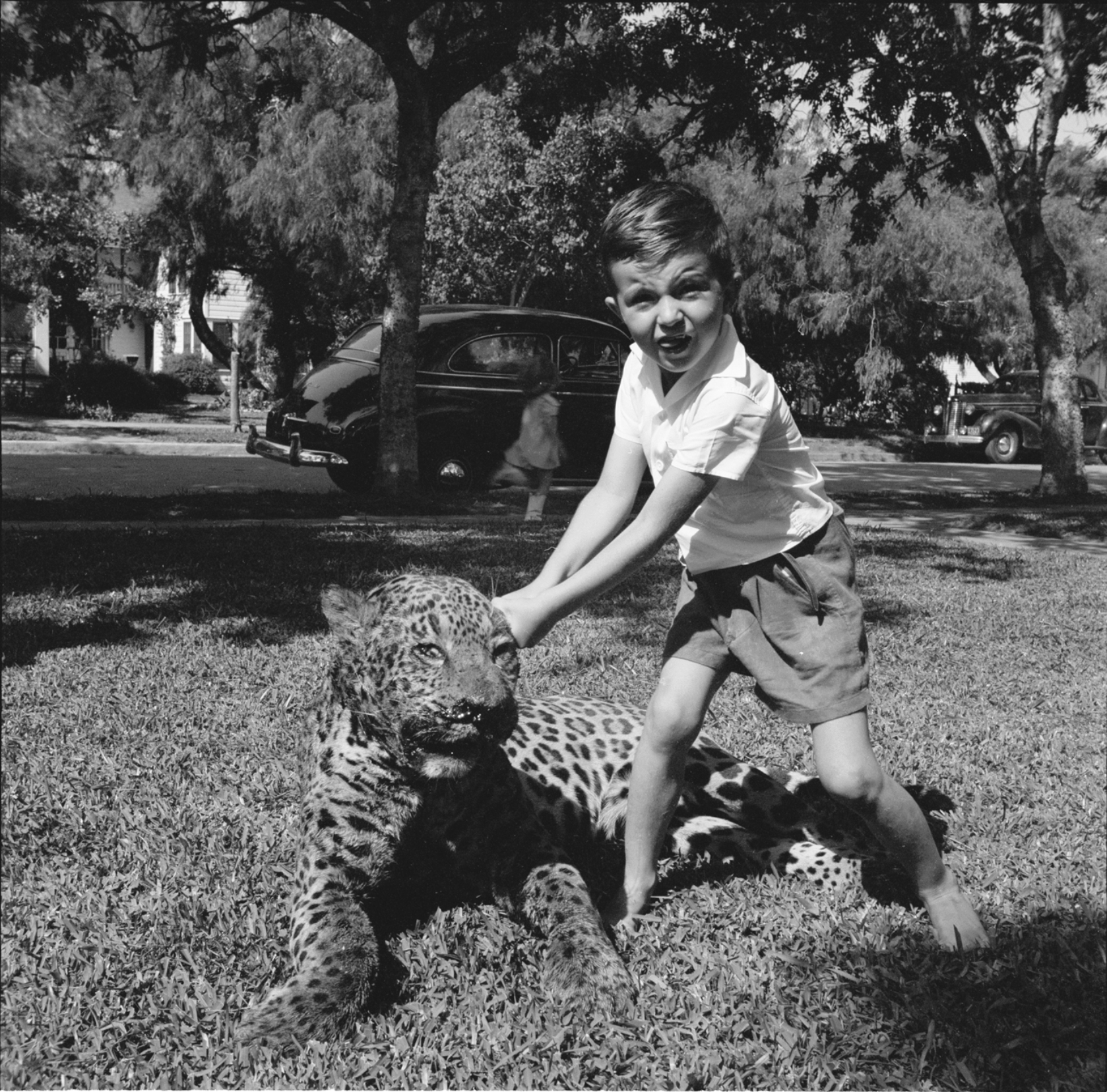
The Kingsville animal is generally regarded as the last confirmed jaguar in Texas.
Think about the timeline.
1856 — Mason.
1903 — Mills County.
1909 — London.
1915 — Ozona.
1946 — South Texas.
1948 — Kingsville.
Then the confirmed Texas record goes quiet.
In the span of roughly a century, an animal early Texans described across large portions of the state had effectively disappeared.
But Jaguars Didn't Disappear From America
There is one final twist to this story.
Wild jaguars still live south of the United States in Mexico.
And occasionally, they walk north.
In recent years, trail cameras have repeatedly photographed male jaguars in southern Arizona.
These animals weren't released.
They crossed into the United States naturally from populations in Mexico.
More than seventy-five years after the last confirmed Texas jaguar disappeared, a wild jaguar can still walk north across the international border and enter the United States under its own power.
That doesn't mean jaguars are about to return to the Texas Hill Country.
There is currently no verified evidence of a modern Texas population.
But it makes those old stories from London, Mason and the Guadalupe seem a little less distant.
The jaguar isn't an animal from some prehistoric Texas.
It is still here on this continent.
Just no longer here.
The Land Has a Longer Memory Than We Do
That's ultimately what fascinates me about this story.
I spend a great deal of time walking ranches across the Texas Hill Country.
We naturally evaluate land through the things that matter today:
Water.
Access.
Soils.
Grazing.
Wildlife.
Improvements.
Views.
Development pressure.
But every ranch has a natural history that extends far beyond its current ownership.
A rocky canyon outside Mason.
A thick creek bottom along the Llano.
A spring-fed draw near Junction.
A stand of mature timber along the Guadalupe.
Today we see those places through modern eyes.
But 150 or 200 years ago, they were pieces of a much larger and more connected landscape.
Wildlife didn't recognize property lines.
It didn't recognize county lines.
It certainly didn't recognize an international border.
Bison, wolves, black bears, mountain lions and jaguars moved through that Texas.
Some remain.
Some are returning.
Others exist now only in photographs, museum collections and old stories.
Next Time You Drive Through London
The next time you're headed west from Fredericksburg toward Junction and pass through London, take a look at the hills around you.
Look into the cedar breaks.
The rocky draws.
The creek bottoms.
Then think about that photograph from 1909.
Two boys and their dogs walked into those hills expecting to find a bobcat or fox.
Instead they came home with a 126-pound jaguar.
Not in the Amazon.
Not in Mexico.
Right here in the Texas Hill Country.
And not nearly as long ago as you might think.