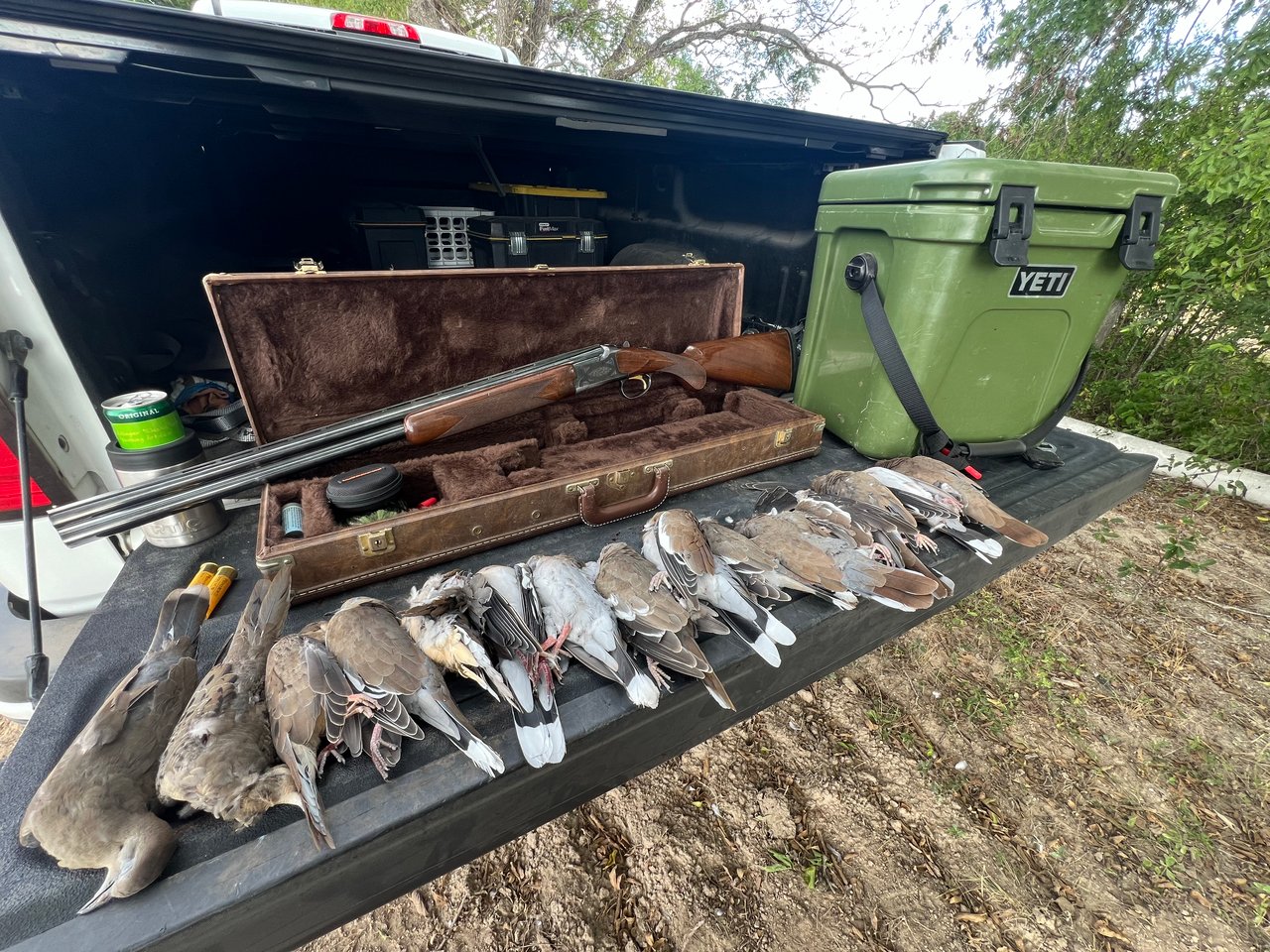
September 1 means something special in Texas. For many of us, the opening of dove season marks the unofficial beginning of fall—even if the afternoon temperature still feels very much like summer.
Dove hunting has long been one of Texas’s great outdoor traditions. It brings families and friends together across pastures, around tailgates, and over meals that often become just as memorable as the hunt itself. Compared with many other types of hunting, dove hunting has a relaxed and social rhythm. There is time between flights to visit, tell stories, laugh at missed shots, and catch up with people we may not see often enough during the rest of the year.
I am fortunate to be part of a dove-hunting group that has been gathering longer than I have been alive. Every year, we come together in Castroville and spend a few days eating too much, catching up with old friends, and settling into the familiar pace of the hunt.
The details change from year to year. The birds may fly differently, the weather may be hotter, and some years the shooting is better than others. But the heart of the gathering remains the same. We return because it is part of our shared history.
That is what makes traditions like this so valuable. They deepen connections and build community over time. Friendships formed in a field are strengthened around the dinner table. Younger hunters grow up listening to stories about the people who came before them. Eventually, they begin adding stories of their own.
For me, one of the most meaningful parts of the tradition is the shotgun I carry: a 20-gauge Browning Citori over-and-under that was passed down to me by my father-in-law. It is a beautiful, well-made shotgun, but its real value has little to do with what it might bring in a gun shop. Each time I carry it into the field, I am reminded that hunting traditions are handed down through more than stories. Sometimes they are carried in our hands.
One day, when he is ready, that Browning Citori will be passed down to my son, Thomas. He will inherit more than a shotgun. He will receive a tangible connection to his grandfather, to our family, and to the many days we have spent together in the field. I hope he will carry it, care for it, make memories of his own with it, and eventually understand why passing it down matters so much.
A firearm passed from one generation to another carries memories with it—the hunts it has been on, the people who carried it, and the responsibility of caring for it until it is time to pass it along again.
Dove hunting also teaches a particular kind of appreciation for the land. A productive dove field does not exist in isolation. It is shaped by rainfall, available food, nearby water, agricultural practices, habitat, and the stewardship decisions made throughout the year. Hunters may arrive for opening day, but the landowner’s work often began months—or even generations—earlier.
That relationship between land, wildlife, and people is one of the things I value most about Texas hunting culture. Responsible hunting gives us another reason to understand the land, care for its resources, and recognize the importance of keeping working farms and ranches intact and productive.
Of course, opening day comes with responsibilities. Hunters should confirm the regulations for the county and hunting zone, have the proper license, Migratory Game Bird Endorsement, and HIP certification, and make firearm safety the first priority. Respect for the landowner, the birds, and the other people in the field is part of carrying the tradition forward well.
2026–2027 Texas Regular Dove Season
Zone | First Season | Second Season |
|---|---|---|
North | Sept. 1–Nov. 8, 2026 | Dec. 18, 2026–Jan. 7, 2027 |
Central | Sept. 1–Oct. 25, 2026 | Dec. 11, 2026–Jan. 14, 2027 |
South | Sept. 1–Oct. 25, 2026 | Dec. 18, 2026–Jan. 21, 2027 |
Season dates are from the Texas Parks and Wildlife Department. Hunters should verify current county-specific regulations before heading into the field.
When I think about dove season, I certainly remember good hunts and difficult shots. But what stands out most are the people—the familiar faces, the conversations between flights, the shared meals, and the feeling of returning to something that has endured.
Years from now, few of us will remember exactly how many birds were taken on a particular opening day. We will remember who was there. We will remember the stories, the laughter, the meals, and the people who are no longer sitting beside us.
That is the real value of a hunting tradition. It gives us a reason to return—to the land, to old friendships, and to one another.
Here’s to another opening day in Texas.