Scarcity, quality, demand, and the long-term value of owning exceptional Texas river frontage
There is an old saying in Texas that whiskey is for drinking and water is for fighting over. (Some people attribute this saying to Mark Twain but its debatable so Im sticking with it being an old Texas saying.)
There's a reason the saying has endured.
Water has always shaped Texas.
It determined where towns were established, where livestock could be raised, where crops could grow, and where families settled.
Today, water remains one of the most important value drivers in Texas ranch real estate—but the reasons buyers pursue it have expanded considerably.
For many modern Hill Country buyers, a river isn't simply a source of water.
It's where the family gathers.
It's recreation.
It's wildlife habitat.
It's beauty.
It's scarcity.
And increasingly, it's one of the characteristics that separates an ordinary ranch from an irreplaceable one.
But there's an important distinction:
River frontage does not automatically make a property a great investment.
As we discussed in Part 1, not all river frontage is created equal.
And when we're evaluating value, the same principle applies.
Scarcity Is the Starting Point
You can build another house.
You can drill another well, although there's no guarantee of the result.
You can clear cedar, improve roads, rebuild fences, restore habitat, and renovate a lodge.
But you cannot manufacture another mile of the Guadalupe River.
The amount of river frontage in the Texas Hill Country is finite.
And the amount of exceptional river frontage is smaller still.
Now narrow the criteria further.
How much Hill Country property combines:
- Strong, reliable water
- Quality river frontage
- Usable acreage
- Good access
- Privacy
- Attractive improvements
- Proximity to Austin or San Antonio
- And enough scale to create a meaningful ranch experience?
The pool becomes considerably smaller.
That scarcity is the foundation of the premium buyers often place on exceptional river properties.
But Scarcity Alone Doesn't Create Value
Something can be rare without being particularly desirable.
That's why I don't think it's useful to simply say:
"River frontage is valuable."
The better question is:
"What kind of river frontage is valuable, and to whom?"
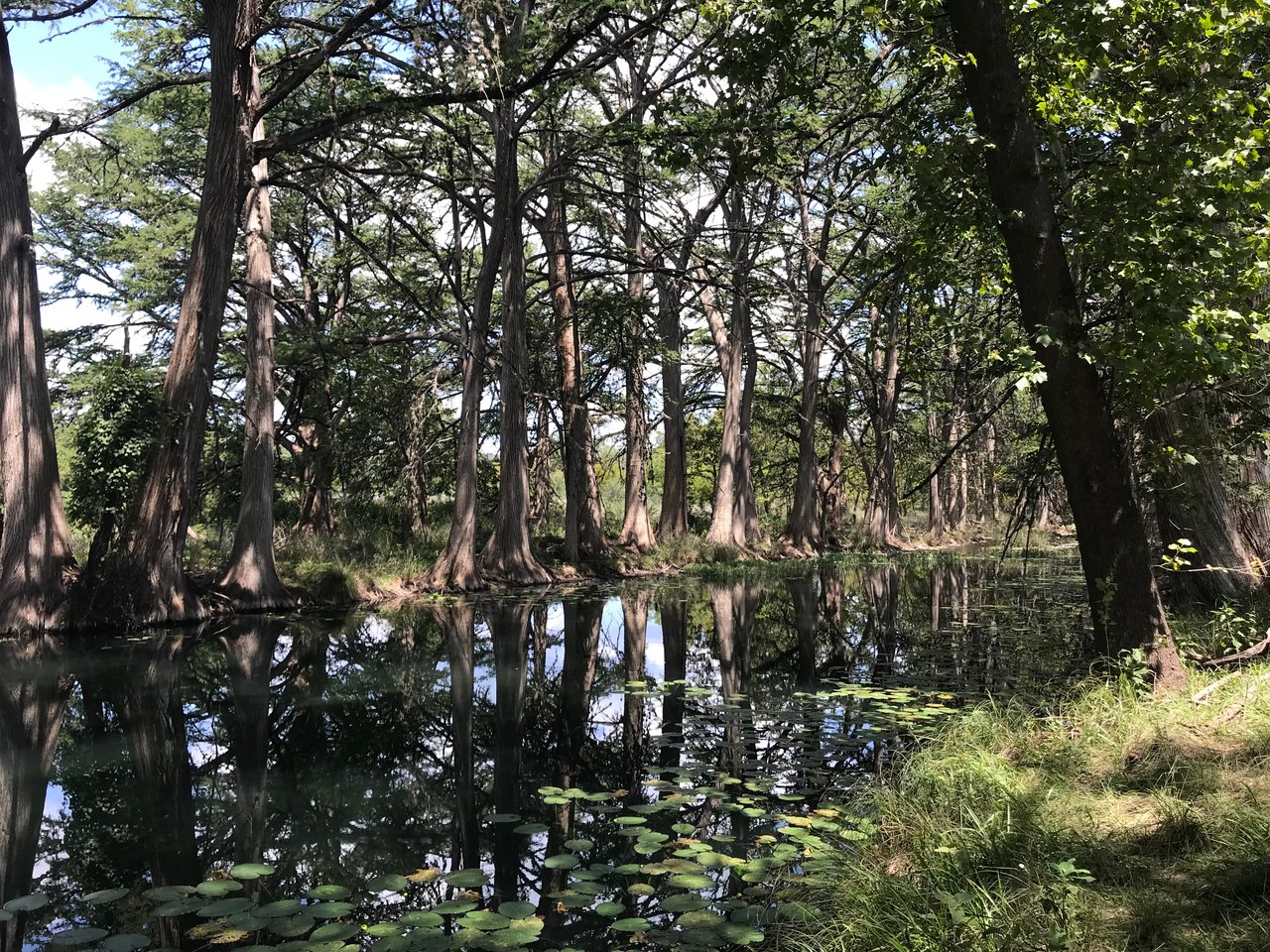
A deep, clear swimming hole beneath mature cypress trees near Hunt may appeal to a very different buyer than a rugged, remote stretch of the Nueces.
A beautiful section of the Llano near a convenient Hill Country town may have a different market than an equally beautiful stretch several hours farther from a major population center.
All may be outstanding properties.
But their buyer pools—and therefore their values—can be very different.
Quality Multiplies Scarcity
This is where the lessons from Part 1 become important.
Imagine two 200-acre ranches in the same general market.
Both have approximately half a mile of river frontage.
On a spreadsheet, they may initially appear comparable.
But Ranch A has:
- Clear water
- A broad limestone bottom
- A deep swimming hole
- Mature cypress trees
- Easy access
- A beautiful gathering area along the bank
Ranch B has:
- Mostly shallow water
- Steep banks
- Heavy brush
- Limited river access
- Less usable recreational frontage
Both technically have the same amount of river.
They do not have the same river asset.
That's why valuing river property strictly by acreage—or even by linear feet of frontage—can be misleading.
Quality changes the equation.
The Drought Test
If you want to understand the value of Hill Country water, look at it during a drought.
A river can look spectacular after a wet spring.
The more revealing question is:
What does it look like when Texas hasn't seen meaningful rain for months?
This is where buyers should investigate:
- Historical flow
- Spring influence
- Persistent pools
- Drought performance
- Upstream conditions
- Aquifer relationships
A stretch of river that continues to provide meaningful recreational and ecological value through dry periods may be fundamentally different from frontage that largely disappears during drought.
That doesn't mean one property is inherently good and the other bad.
It means they should not necessarily be valued the same way.
In Texas, reliability creates value.
The Buyer Isn't Just Buying Water
This is an important distinction.
When a family pays a premium for an exceptional river ranch, they aren't simply purchasing H₂O.
They're purchasing what the water makes possible.
Swimming after lunch.
Teaching a child to fish.
Paddling upstream in the evening.
Sitting beneath a cypress tree with friends.
Watching wildlife move through the riparian corridor.
Gathering multiple generations in one place.
I've seen this happen repeatedly with buyers.
They may begin a search talking about acreage, improvements, and price per acre.
Then they walk down to the right stretch of river.
The conversation changes.
They stop evaluating a commodity and start imagining their family there.
That emotional connection is difficult to quantify.
But anyone who works extensively in river real estate would be making a mistake to pretend it doesn't influence value.
It absolutely does.
Location Still Matters
Exceptional water doesn't exist in a vacuum.
A beautiful river ranch within a manageable drive of Austin or San Antonio generally has access to a much deeper buyer pool than a similar property requiring substantially more travel.
That matters.
For many Hill Country buyers, these ranches are weekend and family properties.
A ranch that's easy to reach Friday afternoon and leave Sunday evening is simply usable more often.
And greater usability generally creates greater demand.
This is one reason river markets around places like Fredericksburg, Kerrville, Hunt, Comfort, Boerne, and other established Hill Country destinations can attract significant buyer interest.
The river creates scarcity.
Location determines how many buyers can realistically enjoy it.
River Property as a Legacy Asset
There is another reason exceptional river properties don't always behave like ordinary land.
Families tend to keep them.
I understand why personally.
My wife Jennifer's family has had their place on the Frio since the 1980s.
At some point, a property like that stops being measured solely by what someone would pay for it.
It becomes the place where everyone knows which swimming hole to go to.
Where children become adults.
Where the next generation begins bringing their own children.
The same is true of my relationship with the Guadalupe.
Some of my strongest memories are tied to stretches of that river around Center Point and Hunt, and years later I baptized my own children in those same waters.
That kind of attachment affects supply in a very real way.
Exceptional river properties can remain within families for decades.
When great stretches do become available, buyers often recognize that another comparable opportunity may not appear for years.
Scarcity isn't only geographic. Sometimes it's generational.
Stewardship Can Protect Value
This is where investment and stewardship begin to overlap.
Poor stewardship can diminish the very thing that creates the premium.
Removing too much riparian vegetation.
Allowing severe erosion to continue unchecked.
Disturbing riverbanks unnecessarily.
Damaging mature cypress.
Overbuilding directly along the water.
Each can change the character of a property.
Conversely, thoughtful landowners can enhance both ecological and economic value by protecting the natural systems that make the river desirable in the first place.
A healthy riparian corridor can:
- Stabilize banks
- Filter runoff
- Provide wildlife habitat
- Protect water quality
- Create shade
- Preserve the natural beauty buyers value
This is why I don't see stewardship and investment as competing ideas.
On great river properties, they often reinforce each other.
Take care of the river, and you're also taking care of the asset.
Be Careful With Price Per Acre
This may be one of the most important valuation lessons with river property.
Price per acre is useful.
But it can also create a false sense of precision.
Suppose one ranch sells for $20,000 per acre and another sells for $35,000 per acre.
Without understanding the properties themselves, that comparison tells us very little.
Was one on the river?
How good was the water?
How much frontage was usable?
Was there a deep swimming hole?
How did the river perform during drought?
Were there major improvements?
How close was it to a population center?
Was the ranch mostly floodplain?
Did it have privacy?
What was the condition of the surrounding properties?
With river ranches, the details matter enormously.
This is one reason experienced judgment remains so important when valuing unique land.
The spreadsheet should inform the analysis.
It shouldn't replace it.
Chris's River Property Tip
When comparing river properties, don't ask only:
"What did the comparable ranch sell for per acre?"
Ask:
"What exactly was the buyer paying a premium for?"
Was it the water?
The swimming hole?
Location?
Privacy?
Improvements?
Scale?
Or some combination of all of them?
Understanding the reason behind a comparable sale is often more valuable than knowing the price alone.
A Lesson from the River
Some of the greatest value in a river ranch cannot be created after closing.
You can build a better house.
You can improve roads.
You can restore pastures.
You can replace fences.
But you cannot install a centuries-old cypress grove beside a natural swimming hole on the Guadalupe.
The truly exceptional features of a river property are often the ones nature took thousands of years to create.
That's why they deserve both a premium and our care.
A great river property can be an investment.
It can be a recreational asset.
It can be a refuge.
But if it's cared for properly, it can become something even more valuable:
A place one generation is proud to pass to the next.
The land we enjoy today becomes the legacy we leave tomorrow.
This article is intended for general educational purposes and is not an appraisal, investment advice, or a representation that riverfront property will appreciate or outperform other real estate. The value and suitability of any property depend on its individual characteristics, market conditions, legal rights, water conditions, and other factors. Buyers and landowners should conduct property-specific due diligence with appropriate professionals.